List of 9 Stunning Types of Stone for Fireplace Designs
Granite for Fireplace

Black Granite Fireplace
One of the most lasting types of stone is granite for fireplaces. It can withstand high temperatures and is very hard to scratch or chip. Granite can also be used in both gas and wood-burning stoves. It comes in many colors and shapes to match any style.
Avantages:
- Extrêmement durable: Granite is one of the hardest natural stones, which makes it very hard to break.
- Résistance à la chaleur: It can handle high temperatures, which makes it great for fireplaces.
- Easy care: It’s simple to clean and take care of.
Les inconvénients:
- Pricey: Granite is one of the more expensive types of stone for a fireplace.
- Heavy: Needs strong support, which could increase the installation cost.
- Needs sealing: Since it is porous, it needs to be sealed to keep spots from showing up.
- Limited color options: While beautiful, the color range is still more limited than manufactured stone.
Ideal for:
- It is best for functional fireplaces or chimneys that need to withstand regular use.
Marble for Fireplace

gray marble fireplace
Marble is a word that means wealth and style. Marbre for fireplace has been beautiful for a long time and is usually found in more formal or grand settings. They have been used in design and construction for hundreds of years since they have clear veins and a smooth, polished surface.
Avantages:
- Polishable: Marble can be polished to a high gloss, enhancing its visual appeal.
- Can resist heat: Marble can handle some heat, making it a good choice for fireplace walls.
- Many shades: It comes in many shades, from clear white and soft brown to dark blacks and greens.
Les inconvénients:
- Soft stone: This material is softer than quartzite and granite, making it more susceptible to scratches and chips.
- Prix: Marble can be pricey, especially for high-quality types with exciting veining.
- Heat sensitivity: Marble can handle some heat, but burning hot temperatures can damage or change it over time.
Ideal for:
- Best for traditionnel or formal fireplace designs where an elegant, polished look is desired.
Quartz for Fireplace
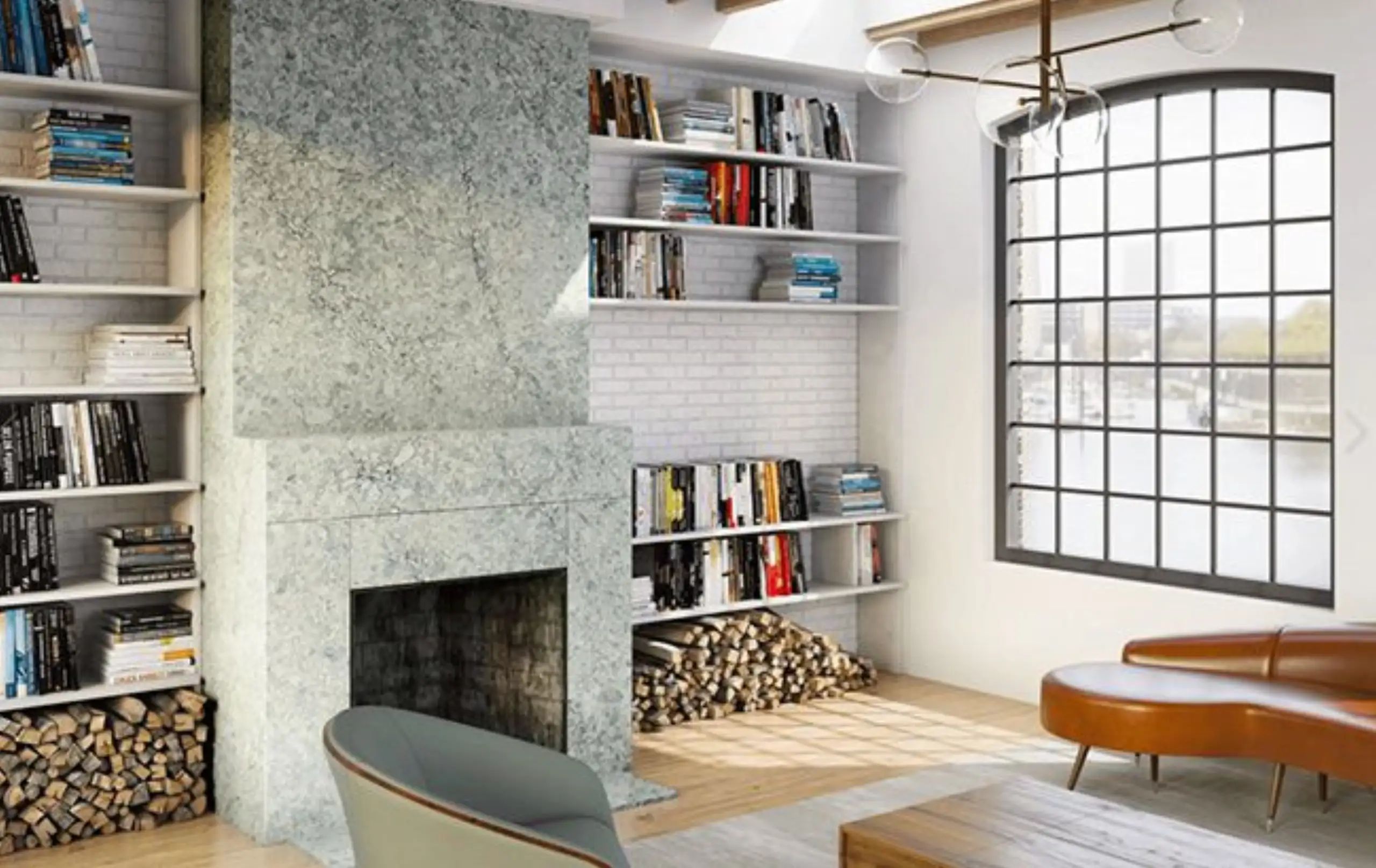
green quartz fireplace surround
Because of its sleek style and long lifespan, quartz for fireplace est a favorite material in contemporary settings. Unlike natural stone, quartz is an engineered stone made by combining natural quartz crystal with resins and pigments, creating a nonporous and highly durable surface.
Avantages:
- Consistent look: Quartz works well in minimalist and contemporary designs due to its consistency in color and texture.
- Non-porous surface: It is non-porous, so it doesn’t soak up liquids. This makes it stain-proof and easy to clean.
- Wide range of patterns: This material comes in solid shades and natural stone, giving designers many design options.
Les inconvénients:
- Artificial look: Although quartz can mimic the look of natural stone, some people may prefer the authenticity of real stone.
- Resin content: Exposure to sunlight for an extended period can change the color of the resins used in quartz.
- Installation complexity: Quartz is heavy and needs to be installed by a professional with support.
Ideal for:
- Homeowners who want a sleek, modern look with little upkeep. It’s ideal for those seeking various shades and a consistent finish.
Quartzite for Fireplace

Blue Quartzite Fireplace Surroundings
Quartzite is a naturally metamorphic rock made from sandstone. It is highly valued for its strength and classy appearance. Quartzite for fireplace can withstand heat and has a beautiful pattern, making it an excellent choice for creating a stylish, long-lasting surround.
Avantages:
- Faible entretien: Requires less upkeep after sealing because it is simple to clean and disinfect.
- Natural beauty: It has a natural, high-end look with spades like crystals and a wide range of shades, from whites and grays to more unusual colors.
- Polyvalence: Perfect for both traditional and modern fireplaces.
Les inconvénients:
- Not easy to find: Some shades or shapes of quartzite are hard to locate, which can cause longer wait times or higher prices.
- Heavier: Quartzite is often very heavy; it must be installed by a professional and given extra support.
- Challenging to work with: Cutting and shaping quartzite can be more challenging due to its hardness.
Ideal for:
- It looks excellent in haut de gamme or luxury fireplace designs. It is ideal for people who want their homes to look elegant, like marble.
Slate for Fireplace
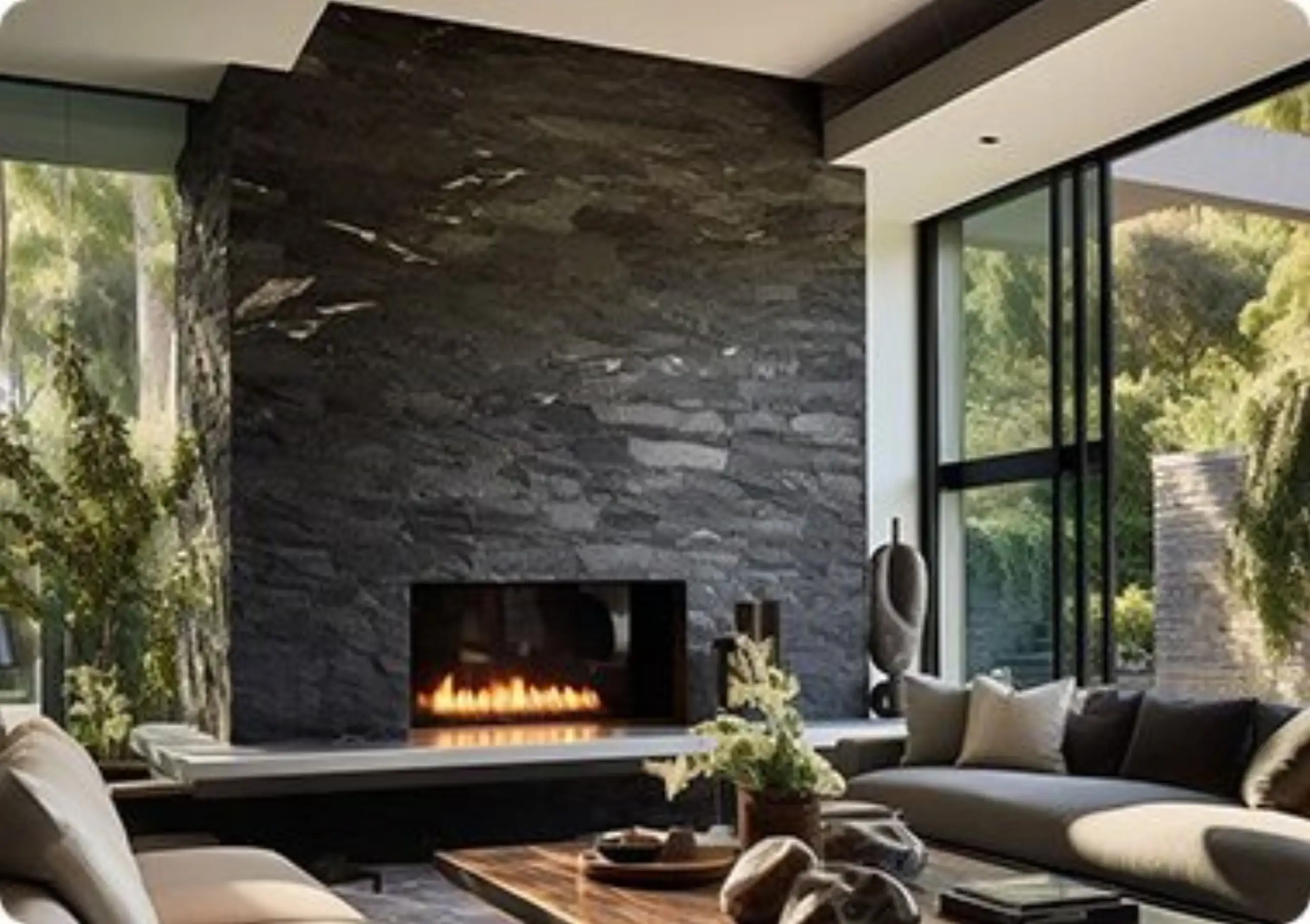
Slate fireplace
Durability and distinctive texture are the key features of slate. Because it was formed and rich, deep shades are distinguishing features of slate for fireplace. As a result of its formation from metamorphic rock, slate has rustic yet refined looks that work wonderfully for fireplaces in contemporary and classic homes.
Avantages:
- Fire resistance: Slate is naturally fireproof, great for fireplaces, and can withstand heat without breaking down.
- Has multiple shades: Like other materials, it comes in many tones, from dark gray and black to green, rouge, and purple. It can easily match any home style.
- Hardiness: Slate is tough. It can withstand high temperatures and will not chip or crack.
Les inconvénients:
- Limited finishes: People who want a smooth, polished look might not like slate’s uneven surface.
- Prix:Slate is a durable material, but its high price can be a problem for people trying to save money.
- Weight: This heavy material may need assistance during installation, making it harder or cost more.
Ideal for:
- It works wonderfully with moderne et classic fireplace styles. It is perfect for homeowners who need a fireproof material that provides a genuine, rustic vibe.
Limestone for Fireplace

Cheminée en pierre calcaire
Calcaire for fireplace is another popular option, especially for those who prefer a softer, more neutral look. This material is readily available in shades of white, crème, and beige and has a more traditional and quiet appearance.
Avantages:
- Beautiful look: Limestone’s soft, neutral tones give it a classic beauty that goes with many home styles.
- Temperature resistance: Like many other natural stones, it can handle high temperatures well, making it a safe choice for furnace surrounds.
- Flexible: Limestone can be carved into many different shapes and styles, from smooth and modern to detailed and ornate.
Les inconvénients:
- Porous surface: Limestone is a porous material. It can soak up liquids and spots if it’s not sealed correctly. Maintaining and finishing it regularly will keep it looking its best.
- Softer stone: This material is not as hard as slate or granite, so it easily chips, cuts, and wears down over time.
- Lack of color variety: Limestone has beautiful, natural tones but not as many colors as slate or granite.
Ideal for:
- It is excellent for those who want a simple, basic look that will never go out of style, whether traditionnel, méditerranéen, or moderne.
Stone Veneer for Fireplace
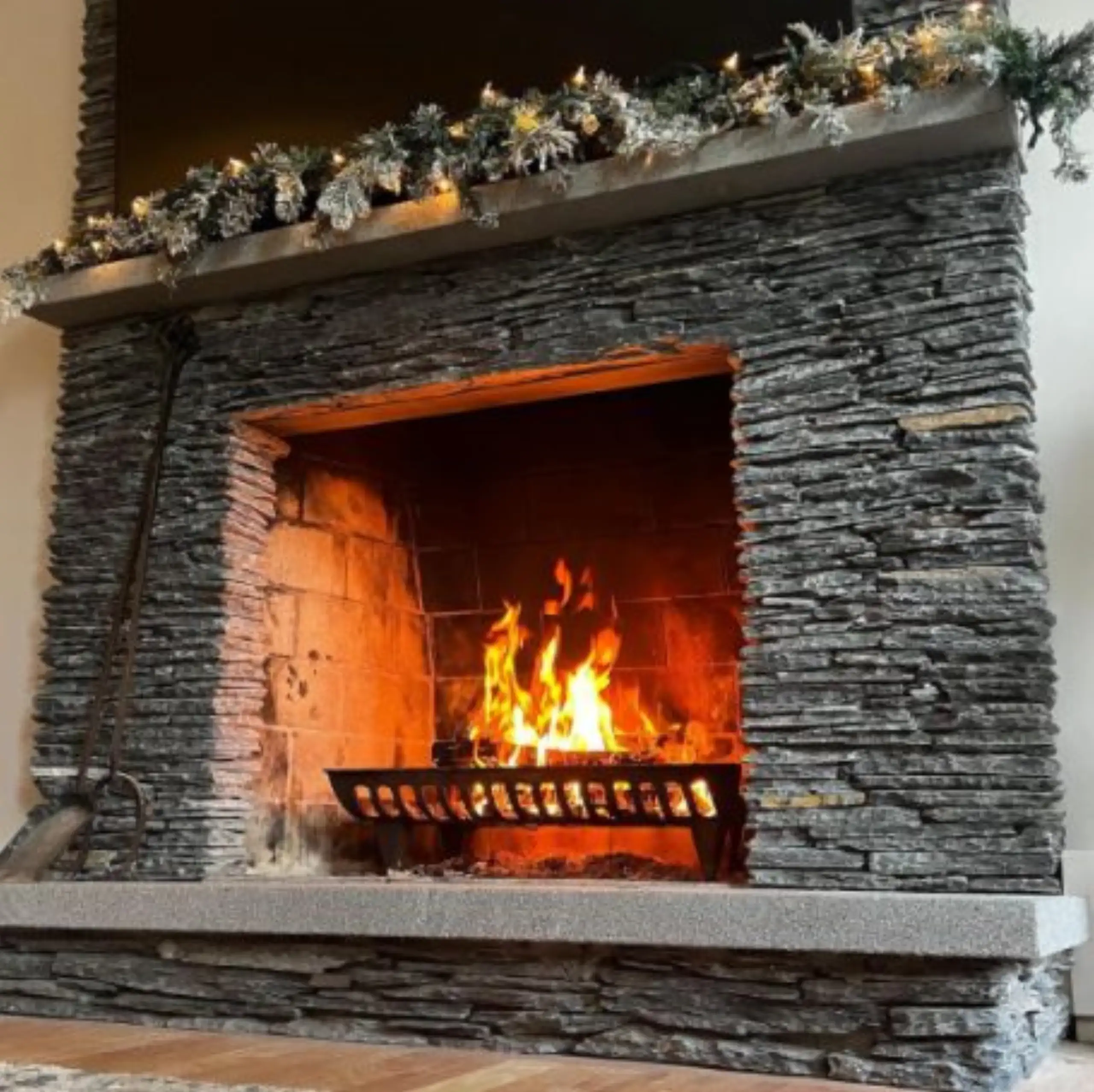
Stone Veneer for Fireplace
Homeowners often choose stone veneers for fireplace when they want the look of natural stone but don’t want to pay or carry as much. Stone veneers are stylish and affordable options made from thin pieces of natural or artificial stone that look like complete and real stone.
Avantages:
- Poids léger: Stone veneer is much lighter than natural stone, which makes it easier to install and means it doesn’t need as much structural support, saving money and installation costs.
- Different style: Stone veneer can achieve many different looks, from rough fieldstone to sleek, modern styles.
- Facile à installer: Stone veneer is easier and faster than heavier stone products.
Les inconvénients:
- Longévité: Stone veneer lasts long but not as long as natural stone. Perhaps it will show signs of wear or damage over time.
- Appearance: Dans certains cas, this material may not look as authentic as natural stone, incredibly up close.
- Résistance à la chaleur: Stone veneer can be used for fireplace surrounds, but it might not be as heat-resistant as thicker, accurate stone materials.
Ideal for:
- This product is ideal for DIY projects or homes with weight restrictions and for homeowners seeking a budget-friendly option that mimics the look of natural stone.
Faux Stone for Fireplace
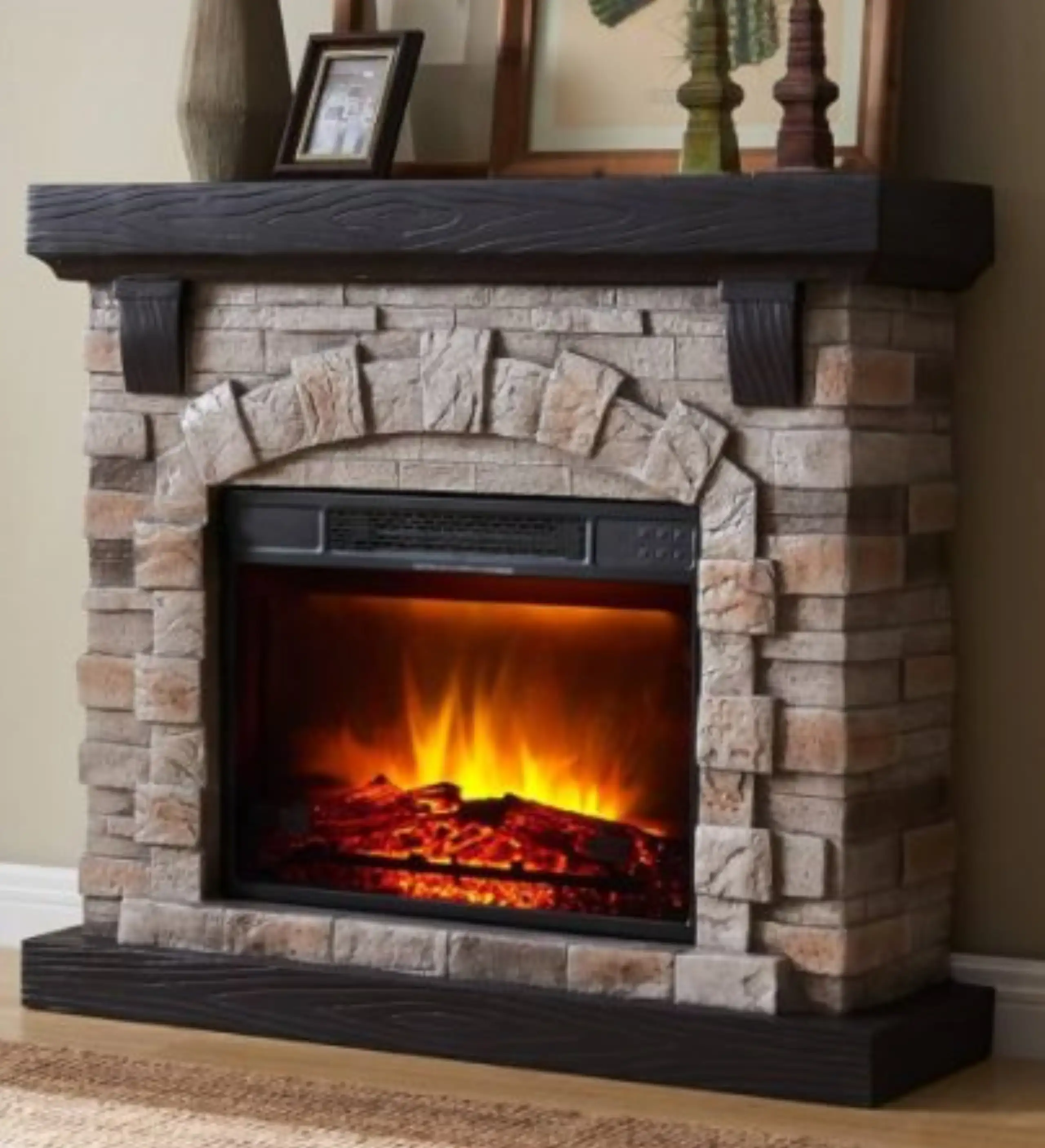
Faux Stone for Fireplace
Faux stone for fireplace is another option. It is manufactured from synthetic materials such as polyurethane yet looks much like natural stone. Compared to stone veneer, faux stone is lighter and more reasonably priced without sacrificing any of its natural beauty.
Avantages:
- Extensive variety: Fauxstone can be shaped and painted to resemble practically any stone, from naturally occurring river rocks to artificial, roughly-hewn fieldstone.
- Simple installation: Its small weight and intuitive design make it perfect for do-it-yourself and rapid installs.
- Reasonably priced: Fauxstone is the least expensive option on this list, making it an excellent choice for homes on a budget.
Les inconvénients:
- Lower durability: Fauxstone doesn’t last as long as natural stone. It can get damaged and worn down over time, especially in areas with much foot traffic.
- Heat sensitivity: Some types of fake stones might not be able to handle high temperatures or natural stones.
- Artificial feel: It might not have the same natural texture and feel, especially when closely examined.
Ideal for:
- Homeowners on a tight budget who still want the appearance of a stone fireplace. It’s ideal for minor upgrades or DIY projects where weight and cost are essential.
Onyx for Fireplace
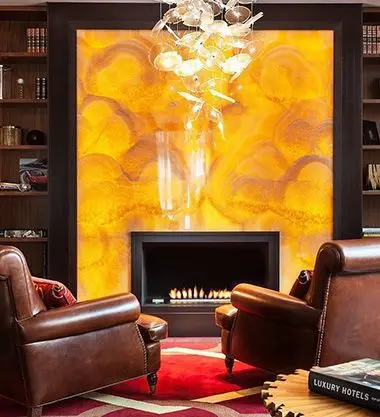
Cheminée Onyx Doré
Onyx for fireplace is a beautiful and rare stone known for its bold patterns and clear appearance. Because it’s so fragile, it is often used as a stylistic element in high-end fireplace design instead of a material that can be used for warmth.
Avantages:
- Translucidité: Onyx can be backlit to create a fascinating glow that can make a fireplace look even more elegant.
- Stunning look: It has bright shades and complex veining. It is often lit from behind to make it look even more beautiful.
- Des motifs uniques: Each piece of this material is exceptional, making it a statement piece in any fireplace design.
Les inconvénients:
- Fragility: Onyx is a soft and brittle stone that easily chips and etches, making it less sturdy for fireplaces that need to last.
- Entretien élevé: It needs to be sealed and cleaned gently regularly to keep it from getting damaged.
Ideal for:
- People who want glamorous and artistic designs for their fireplaces. This material is best suited for decorative purposes instead of being used in high-heat or high-use places.
Conclusion: Selecting The Best Stone For Your Fireplace
Choosing the suitable types of stone for fireplace can change the look of your living room. Consider your budget, aesthetic preference, and maintenance requirements to ensure you create a stunning and long-lasting fireplace you’ll enjoy for years. Carefully weigh the pros and cons of each material to find the one that best fits your home.
If you’re looking for an expert to assist in designing your fireplace, you can trust George Stone for exceptional craftsmanship. Contact them today for the best results.
FAQs:
Which type of stone for a fireplace can handle extreme heat?
- Granit is one of the best heat-resistant stones for a fireplace. It can handle high temperatures, and its natural strength makes it resistant to cracking or chipping, even with frequent use.
What kind of stone is the least expensive for a fireplace?
- Typiquement, the most budget-friendly choices are stone veneer et faux stone, which look comparable to natural stone but cost less.