
Travertine Coping And Deck Supplier- George Stone
Here are the TOP TRAVERTINE STONE PICKS






Travertin Coping & Deck Edge Design And Drip
We offer a large selection of edges, with customization available. Here’s what most our Travertine clients ask for.

You can get drip grooves with these coping edge designs, except for Drop Face - that one acts as a good way to disperse water on its own.
You can get drip grooves with these coping edge designs, except for Drop Face - that one acts as a good way to disperse water on its own.

You can get drip grooves with these coping edge designs, except for Drop Face - that one acts as a good way to disperse water on its own.
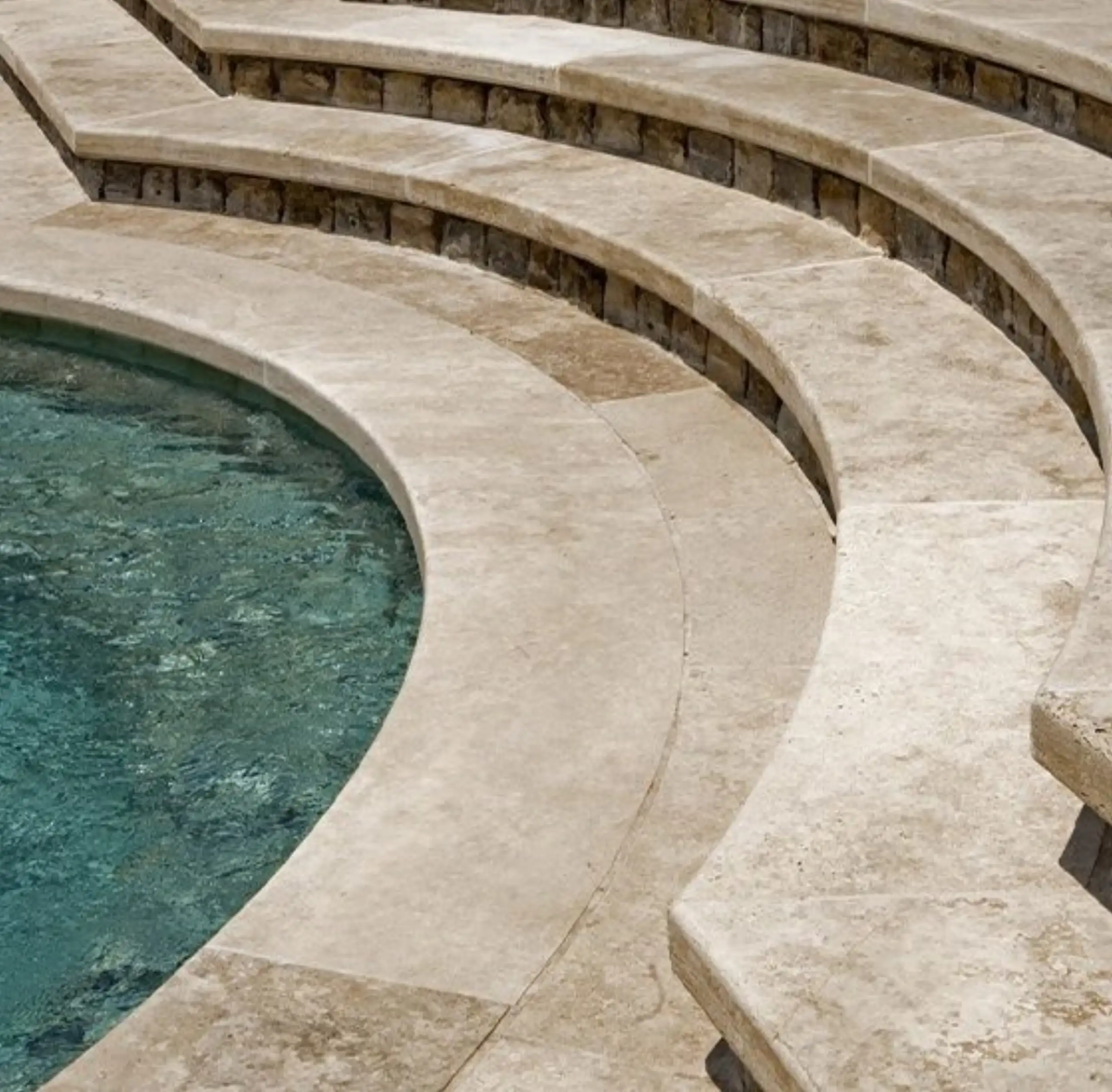
Travertine is fairly thick, so this kind of edge style fits it well. You get fully rounded edges top and bottom, on both sides. It’s a good style to go for if you want rough charm mixed in with elegance.
Drop Face is where your edge dips downwards after extension from the main surface. It’s usually a perpendicular dip, creating a modern yet complex look. It fits nicely for stair treads and wall copings.
This is the more common style you see, where both the bottom and top have sharp edges, and the vertical transition between both edges is fully rounded.
Travertin Coping & Deck Edge Design And Drip
Travertine pool coping offers a natural, near-unprocessed stone look that complements many outdoor designs. Here are some reasons you might want to try it.
Pros
- Attractive, luxurious appearance.
- Durable and long-lasting.
- Can easily be made slip resistant.
- Popular and trendy mid-range option.
- Available in a variety of earthy colors.
- Increases home’s perceived value.
- Low maintenance if properly sealed.
- Cool surface, even on hotter days.
Nackdelar
- More expensive than concrete coping.
- Requires more maintenance than some other options.
- Can stain easily from soil, pool chemicals, and plant matter if not properly sealed.
- While quite hard, can still crack if subjected to heavy impacts or load-bearing uses beyond coping.
Travertine Coping And Deck Tiles Application


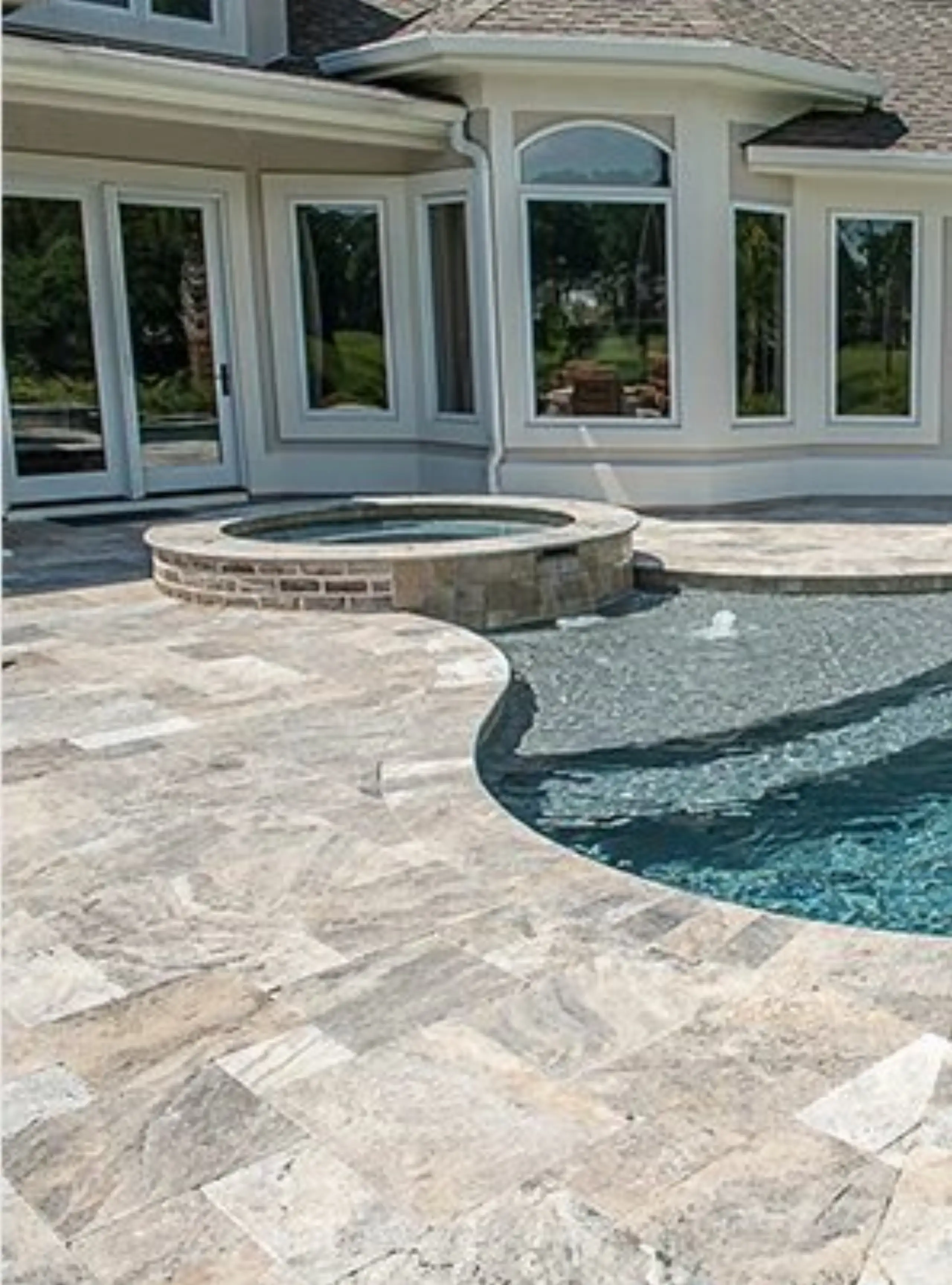
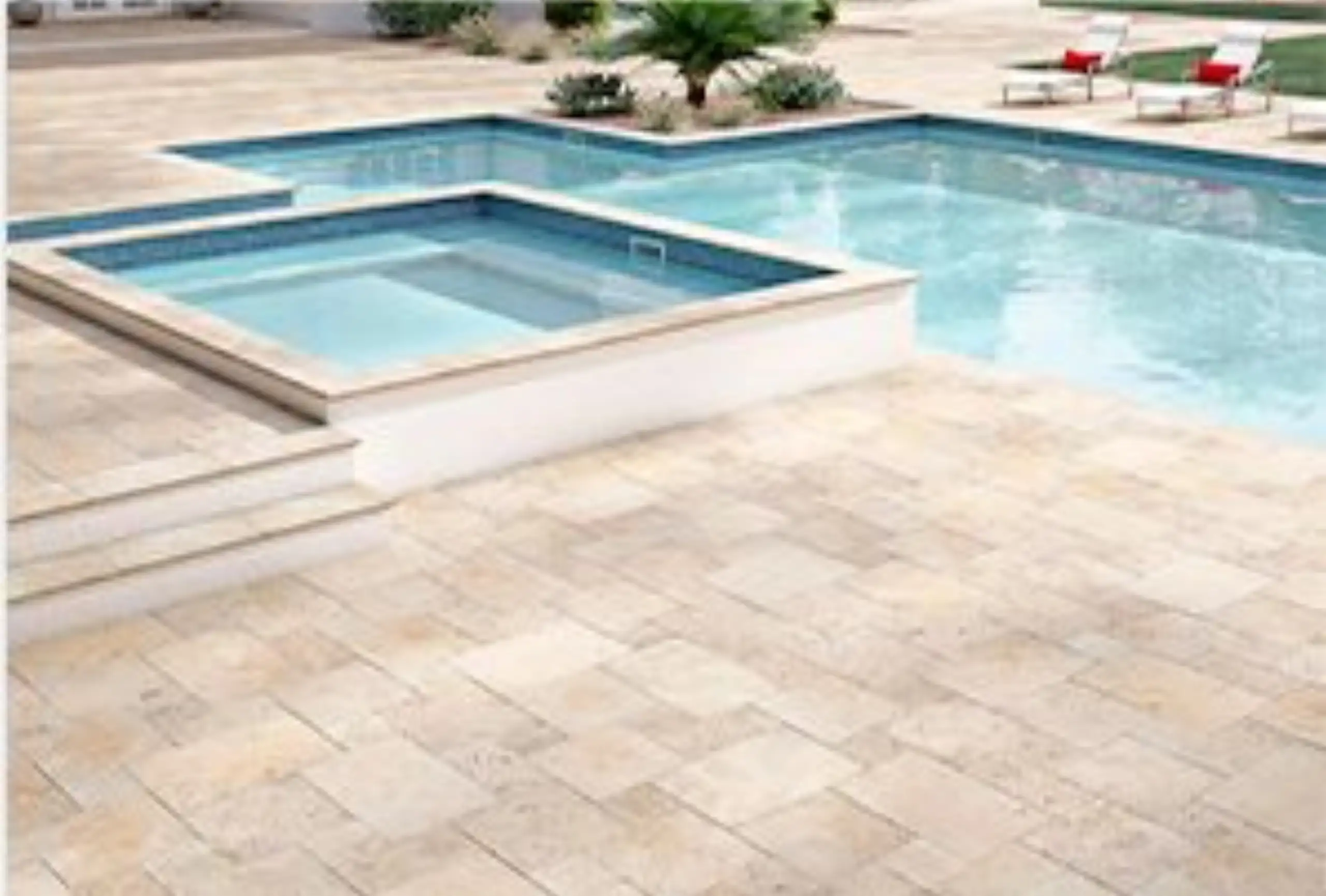
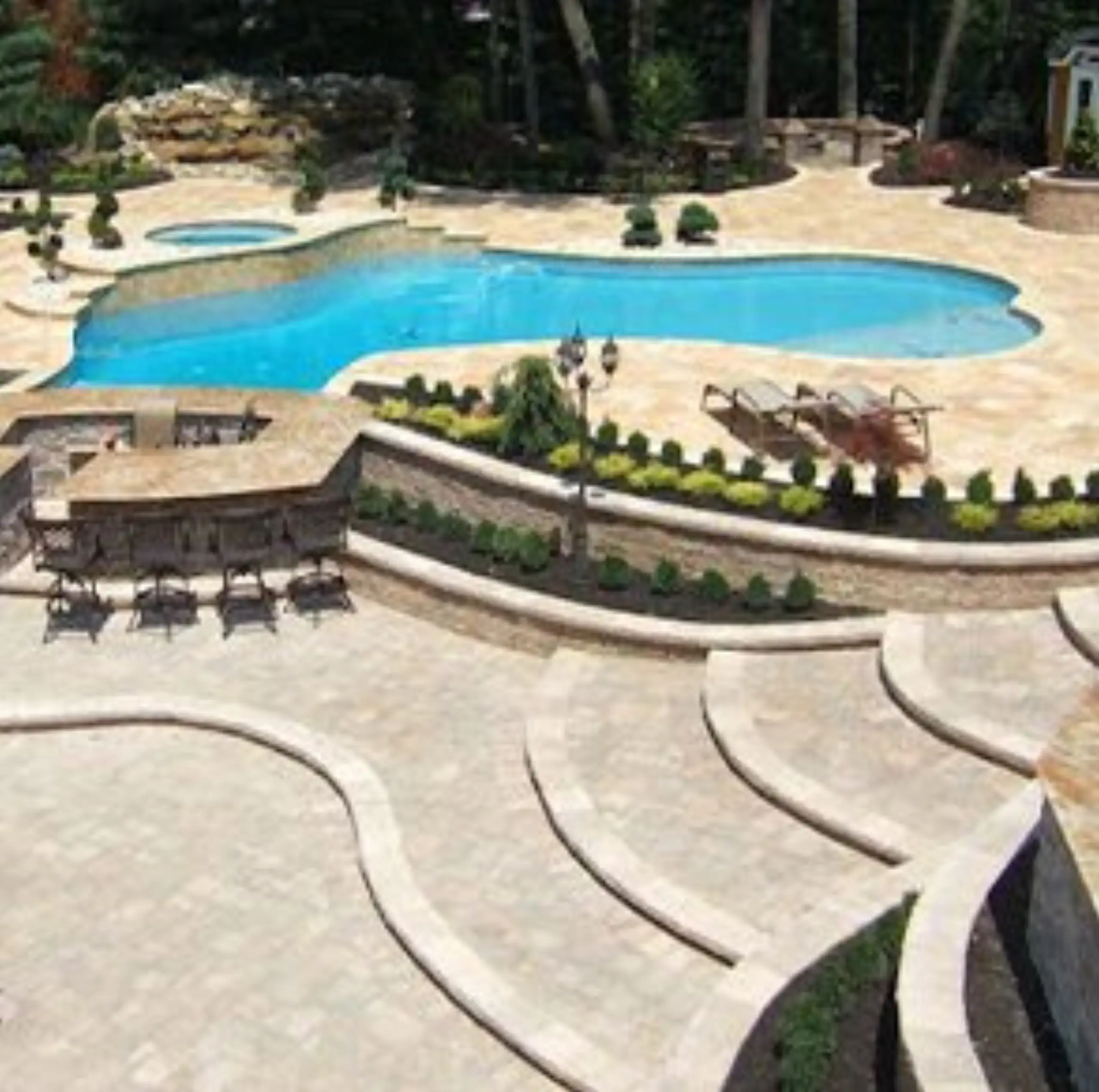
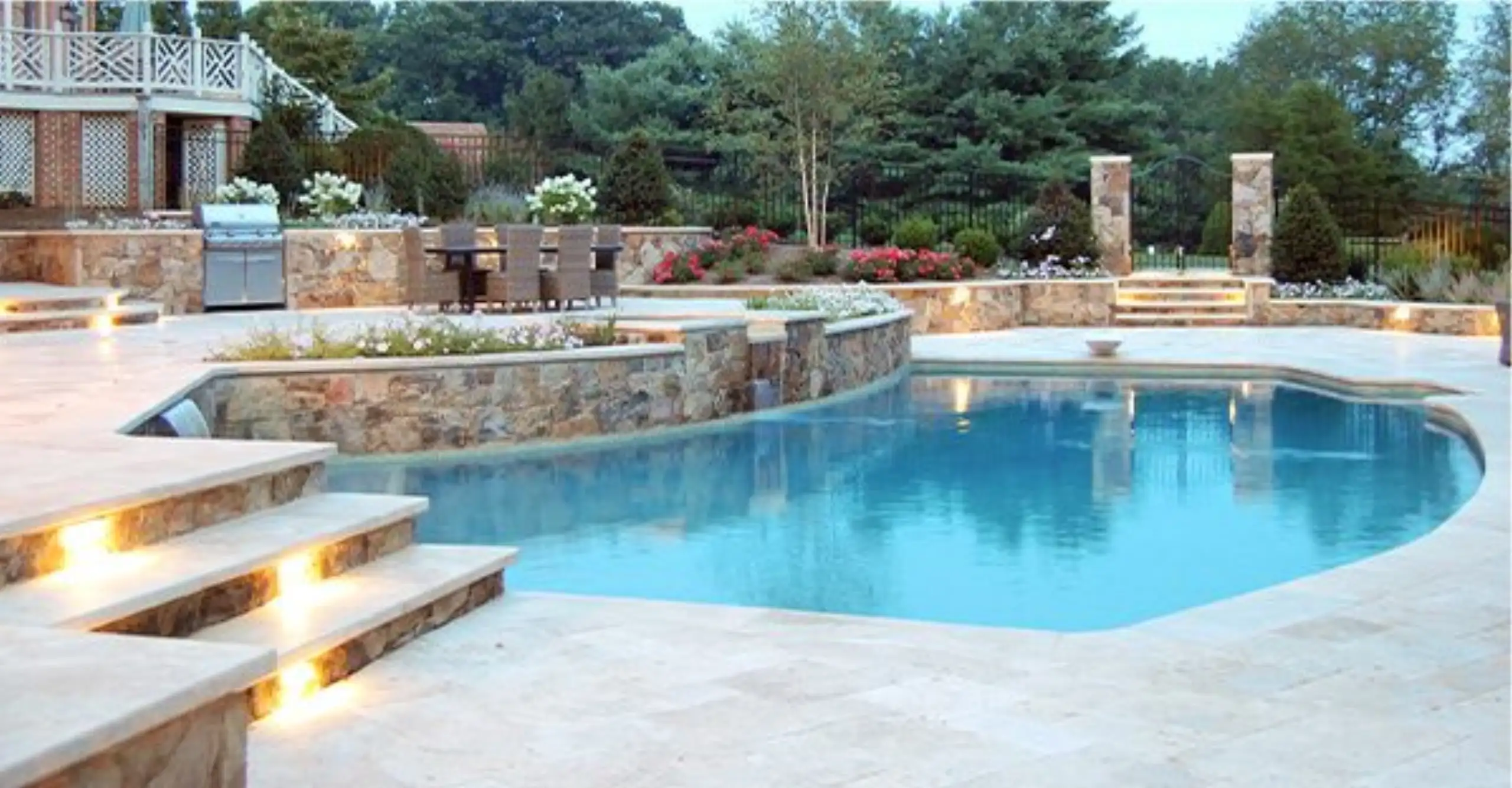
This one isn’t that hard to get - travertine can get you a natural, grounded look to the coping and deck of your pool. It can even be as elegant as Marble, with less of the drawbacks of the latter.
If you’re into a more natural look, you can’t keep your walkways as pure soil, as that will interfere with cars and sometimes make walking uncomfortable, especially when it rains. You can rectify that by using Travertine as the paver - you get solid, even exterior flooring that fits perfectly with the rest of the soil.
A well made outdoor kitchen won’t clash with the rest of your landscape, but better safe than sorry, rätt? You can get the perfect outdoors look by fitting travertine into your kitchen countertops. And enhance the overall look of the kitchen, on top.
Having remarkable heat resistance, Travertine can fit well around fireplaces. The radiant warmth won't make the color fade or make it crack. You also get extra benefits. For one, its earthy tones and organic texture fit with the fireplace's rustic charm. It can also take on the weight of firewood and foot traffic easily. And to top that, the ashes are also easier to clean off.
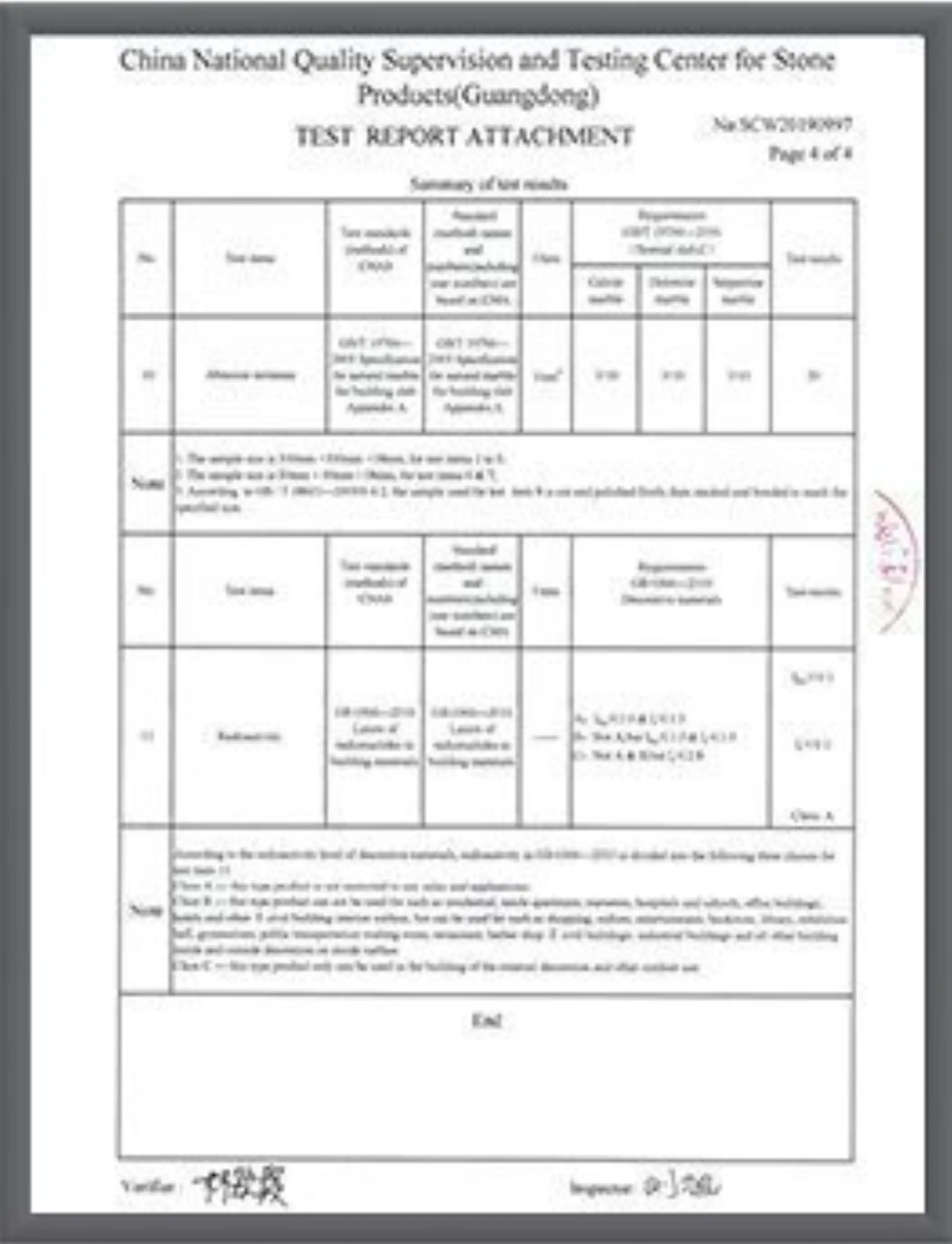
Certifikat
Vi innehar certifikat som är nödvändiga för ett legitimt företag, som SGS, ISO, och ledningssystem för kvalitetsproduktion.


Eller ring oss: +86 13077409280
Frequently Asked Questions About Travertine Pool Coping and Deck from George Stone
Since Travertine is just getting popular again, you probably don’t know much about it. We’ll try to help you out – take a look at these common questions so you can make a purchase from us without regret.
1.What is Travertine pool coping?
If you want to add to the natural vibe of your yard and still have a fancy pool that wows everyone, you’re going to love travertine. Here’s a rundown of what you’re getting with it:
- Material Composition: Calcium carbonate normally likes to stay dissolved in water, but it can only hold so much.The water can sometimes get saturated (holds all the calcium carbonate it can), though, or something disrupts the balance (like temperature change).
That means the extra calcium carbonate has nowhere to go but solidify and come out of the solution, leading to the creation of travertine. This sort of thing is most common in mineral springs or geothermal waters. Being made up in such a way, it’s porous and actually a relatively soft type of limestone.
- Utseende: Travertine pool copings and travertine pool decks both work great at providing an earthy look, without the roughness of Sandstone (both in terms of feel and look). You can find it in different shades of beige, tan as well as reddish-brown.
Most of the time, it has very distinct veining and swirling patterns. Its actual surface texture can range from smooth to slightly rough, depending on the kind of finish you’re going for. You can also get this kind of stone if you want to add a warm and inviting tone to your home – we can assure you that it won’t even clash with modern settings.
- Varaktighet: Travertine is a relatively soft stone compared to other materials like granite or quartzite- rated to be around 3 och 4 on the Mohs Scale of Hardness.
Despite that however, it can still take quite a beating and is resistant to weathering and erosion as long as it’s properly sealed and maintained.
It won’t break because it is designed to tolerate the exposure to pool chemicals, heavy foot traffic, and sunlight.
2. Is Travertine good for pool coping?
Travertine is good choice for pool coping. It offers several advantages which you cannot get from other natural stones.
Firstly, safety is paramount around a pool. It doesn’t get slippery like finished marble floor becasue it has porous surface and natural texture.
Unlike some polished stones that can turn treacherous, travertine’s tiny holes actually absorb water, preventing a slick surface.
You might ask – isn’t too much water absorption bad for the stone’s structural integrity? Väl, in this case, it isn’t. This kind of stone isn’t as porous as something like Marble, and even if it did absorb a fair bit of water, it can still hold up well. Due to directly being a type of Limestone, it’s naturally more stable in water compared to Marble’s calcium carbonate with additional minerals. Travertine’s structure can handle the absorption and release cycles much better.
Beyond safety, travertine has another unique benefit – it stays cool underfoot. The stone’s inherent properties allow it to radiate heat away and reflect sunlight, keeping the coping comfortable even on scorching days. This is a welcome feature for poolside lounging or entertaining.
3. Travertine pool coping vs Travertine deck, which should I install first?
You might be thinking of getting travertine for your pool, but you might not be able to get both the coping and deck from the get-go. What should you do in that case? This table might help you figure things out.
Aspect | Travertine Pool Coping | Travertine Deck |
Purpose | Beyond just finishing the pool edge, high-quality coping acts as a structural element, supporting the weight of the pool walls and distributing hydrostatic pressure evenly. | Serves as a comfortable, attractive surface around the pool area for walking and lounging. |
Installation | Usually installed after the pool shell is constructed and before the deck is laid. Can be extended over the pool edge or flush with the pool wall. | Usually better to install after the coping is in place, with plumbing and electricals installed. |
Safety | Coping helps prevent accidental falls into the pool by providing a defined edge, especially for children and visually impaired individuals. It can also incorporate tactile surface indicators for the visually impaired. Lastly, it can be used to circumvent running into sharp pool edges through using softer coping edge styles. | Provides slip-resistant deck surface to prevent accidents, especially when the deck is wet. Proper installation with a slight slope (1-2%) away from the pool ensures efficient water runoff, minimizing slip hazards further. |
Lifespan And Durability | High-quality travertine coping is dense and less porous than regular travertine, making it more resistant to staining, etching from pool chemicals, och frys-tina cykler. Proper installation and sealing further enhance its longevity. | Same as the copings, but the risks are higher. The porous nature of the stone will already make it absorb water and have it potentially pool under, which can cause issues unless proper drainage is installed. Water can gather through potential gaps, för, if the decks aren’t properly installed. |
Underhåll | Not a lot of extra attention needed, easier to keep clean and well-maintained. | If proper drainage isn’t installed, it can be very troublesome to keep water from pooling under and causing structural damage. |
Extra Comforts | Provides a comfortable surface for sitting and dangling feet in the pool | Has a slightly rough but consistent and even surface that’s comfortable to walk on while barefoot. Also stays cool even in hot days, moreso than concrete and other materials. |
4. Limestone vs Travertine pool deck, is the latter worth it?
Ja, det är, in a lot of aspects. Take a look at this.
Aspect | Limestone Deck | Travertine Deck |
Material Origin | A sedimentary rock composed primarily of calcite or aragonite formed from the remains of marine organisms. Sourced from various regions worldwide, including Indiana (U.S.), Portugal, Frankrike, and Saudi Arabia. Dock, it’s more widespread and can be sourced more cheaply than its more unique counterpart. | Formed by naturally solidified calcium carbonate from geothermal hot springs. Commonly quarried from regions like Tuscany (Italien), Pamukkale (Kalkon), and Mexico, known for their unique mineral deposits. |
Slip Resistance | Typically less slip-resistant than travertine in its natural state. Dock, limestone can be honed, borstad, or flamed more easily than other stones, to create a textured surface with increased traction. Anti-slip treatments or coatings may also be applied. | Naturally porous and textured surface provides excellent traction when wet, reducing slip hazards around pool areas. The pits and grooves created by the mineral deposits help channel water away, improving slip resistance. |
Heat Retention | Generally absorbs and retains more heat from sunlight than travertine, as it is denser and less porous. Darker limestone varieties may absorb more heat, while lighter shades reflect more sunlight. | Tends to stay cooler underfoot than many other paving materials, including limestone, due to its porous nature and ability to disperse heat more effectively. |
Underhåll | Requires less frequent sealing and cleaning than travertine, but still needs regular maintenance to prevent staining and wear. Periodic resealing (every 3-5 år) and cleaning with pH-neutral cleaners is recommended. | Requires regular sealing (every 1-3 år) and cleaning to prevent staining and discoloration from pool chemicals, sunscreen, or spills. Similar maintenance process. |
Costs | Approx. $4- $10/Square Foot (at most). | Approx. $5 – $12/Square Foot (at most). |
5. How to do Travertine pool deck maintenance and cleaning?
Taking care of Travertine is a lot like going about any other Natural Stone. Dock, you’ve still got to keep a few specfic things in mind – it comes with a lot of the same sensitivities as Marble does. We’ll break that down for you below.
Regular Cleaning: First things first – never let loose debris, dirt, and leaves stay on the surface. If you do, there’s a chance that some of them will grind into the stone and damage it’s look – it’s not particularlty hard, after all. Sweep all that away as often as you can.
Use a pH-neutral, non-acidic cleaner specifically designed for travertine or other natural stones. Acidic cleaners can etch and damage the surface over time.
Deep Cleaning and Stain Removal: For these or built-up grime, your safest bet is to create a poultice using a pH-neutral cleaner or a mixture of baking soda and water.
Everything else is the same as you’d treat a natural coping stone like Marble. Don’t let heavy objects drop or be dragged on the surface. Clean up spills as soon as they get onto the surface.
6. Flagstone vs Travertine coping, which works best?
Flagstone is cheaper, so could it be a better alternative for you? Don’t be so sure – take a look at this table to see the benefits Travertine can offer over it.
Aspect | Flagstone | Travertin |
Material | Natural sedimentary rock made up of compressed sand and minerals. | Natural calcium-based stone borne from mineral deposits in hot springs and caves. |
Color/Appearance | Muted tones like browns, grays, tans with varying shades and patterns due to mineral composition. Natural rustic look. | Warmer, more creamy hues ranging from light beige to reddish-brown with catching natural veining patterns. Luxurious appearance mixed in with the rustic look of Sandstone. |
Slip Resistance | Great slip resistance due to natural texture, even when wet, despite not having particularly great water absorption.. | Polished finishes can be slippery when wet. Honed or brushed finishes increase traction. Dock, it does naturally offer a bit of slip resistance compared to something like marble. |
Varaktighet | Highly durable and resistant to cracking, chipping, and fading from UV exposure. Very low porosity. | Similarly dense and durable but more porous, so has more risks of etching from pool chemicals and staining from oils and spills if not sealed properly. |
Installation | Irregular shapes and sizes make installation more labor-intensive. | Usually has uniform shapes and sizes, so it can both be installed easily as a DIY project or done quickly by an expert. |
Costs | Much cheaper at around $10 per square feet. | Costs about $5 – $12 per square feet. |
7. Travertine pool deck vs stamped concrete, which is more worth it?
So why go for Travertine and not something more mainstream like stamped concrete? Here’s a comparison that might give you an idea.
Aspect | Travertine Pool Deck | Stamped Concrete |
Material | A form of limestone created by rapid solidification of calcium carbonate around hot springs and caves. Contains pockets and troughs from ancient marine life impressions. | Concrete mixture poured and tinted with color hardeners/releases. Pattern stamps pressed into surface before curing to create texture mimicking materials like stone, brick, tile etc. |
Utseende | Unique natural warm hues from iron oxides ranging from creamy ivory and beige to reddish-gold and browns. One-of-a-kind veining patterns throughout each piece. | Concrete can be colored/tinted to achieve virtually any color scheme. Stamps replicate patterns and textures of materials like stone, brick, trä, tile etc. Antiquing/staining adds realistic highlights and lowlights. |
Konsistens | Standard polished finish has smooth, glossy surface. Honed provides a matte, flatter finish while brushed has intentional textured grooves. | Texture matches the stamp pattern used – e.g. rough stone texture, raised brick pattern, wood grain patterns etc. Skins/releases added to provide realistic textures. |
Slip Resistance | Polished travertine is slippery when wet. Honed offers more traction while brushed textures have excellent slip resistance. Has some natural non-slip characteristics. | Most stamped concrete textures provide decent slip resistance, but non-slip grit additives are also applied in high-traffic/wet areas for extra effectiveness. |
Varaktighet | Dense but porous composition makes it vulnerable to etching from pool chemicals/cleaners and staining from oils/spills if not sealed annually. Can crack if ground shifts. | Extremely durable and impervious to weather, UV damage, stains etc. Properly installed stamped concrete can easily last 25+ years with just periodic resealing. Resistant to cracks/chips. |
Underhåll | Requires consistent cleaning routine and annual resealing to prevent stains and maintain appearance/finish. Harsh cleaners can damage surface. | Lower maintenance. Periodic cleaning and resealing every 2-3 years based on wear/traffic. Touch-ups easy by reapplying top coat sealers. |
Kosta | Most variations come at $5 – $12/Square per sq ft. | Has basic offerings at $9-$13 per sq ft, with more extensive projects reaching as high up as $20 per sq ft. |
8. What are the popular Travertine pool deck patterns in 2024?
Travertine’s unique porous texture, natural color variations, earthy tones make it a prized pool deck choice. Here are some of the most common patterns we’ve seen our clients use:
- Random Flagstone: Geatures irregular travertine shapes/sizes mimicking natural flagstone’s organic aesthetic, seamlessly blending with outdoor landscapes.
- Versailles Pattern: Has elegant interlocking rectangular, square travertine pieces lend European sophistication.
- The French Pattern: Combines 8×8, 8×16, 16×16, 16×24 tile sizes creating visually dynamic, textured depth and character by adding contrast.
- Timeless Basketweave: Where travertine is woven in a basketweave design, creating a look that is the perfect topping for contemporary or traditional settings.
9. Is the Travertine pool deck slippery around the swimming pool?
Travertine around pools can definitely get slippery when wet because of its porous, soft nature. While the rough texture provides decent grip when dry, travertine’s ability to absorb water fills in those little bumps and pits, creating a slick surface underfoot.
Ovanpå det, regular foot traffic gradually polishes and wears down the roughness over time. You can help by regularly cleaning and sealing it to try to repel water and preserve the texture. Although, if you get a non-slip finishing from the get-go, you might have to deal with less handiwork trying to keep the surface safe.
10. What is the estimated price for Travertine pool deck cost per square foot?
It depends on your supplier. With our connections, we can offer prices of around $15/Square Meter or $20/Square Foot. And that’s an estimation of the final price, för. You don’t have to pay three times more with a different type of travertine.
Our base price involves everything in the whole process, such as labour, sourcing and dealing with quarries that aren’t part of us for when you pick something rarer. Although, if you do, you’d still have to pay a fair bit more, with more complex fiinishes adding to that price further.
11. How to repair the Travertine pool deck?
Repairing a travertine pool deck isn’t as straightforward as something like cement – the compositions of natural stones like these are just too complicated.
With Travertines, they’re porous and full of tiny holes, so you have to excercise care. If the worst you get is small cracks, that’s easier to deal with. Just find filler that works well with travertine – regular old conrete fillers will just seem out of place.
The later will directly clash with the color and texture of travertine. Dock, there’s nothing you can do with bigger cracks or holes – you’ll need to get them pried out and replaced. You can do the tasks yourself, but we’d recommend hiring professional services.
More often than not, the tools in your garage won’t be enough and it’s not worth buying specific tools for a one-off job, or something you won’t do often.
12. How does the Travertine tile cost calculator work?
Travertine tile cost calculators don’t just pull numbers out of thin air. They take the total area you need to cover – every last square foot into account.
But it’s not just about the square footage, they look at the specific tile size, pattern, and layout you want too. Then they factor in all the extra materials needed like grout, sealants, and that underlayment layer. For the most part though? They’re calculating based on the per square foot cost of the specific travertine type you picked.
Travertine pricing can vary wildly based on quality, finish, even where it was quarried. Sophisticated calculators on the sites of bigger suppliers will even estimate labor costs for your area.
13. How often do I need to do Travertine pool deck sealing?
With Travertine, you’ve got to do sealing often. The tiny little holes pull in chemicals, oils and other substances easily. And before long, the gorgeous surface of your travertine ends up stained and etched.
The right sealant can go a long way towards repelling all sorts of substances, including water, oils and other contaminants. A good practice is doing the sealing annually, unless your stone seems like it’s already absorbing too much water.
If you miss doing this at the right time, you’ll directly end up with an unsightly and damaged deck. You can also protect your deck from having its color fade due to UV rays by sealing on time.
14. What is the Travertine pool coping installation process?
For copings, the installation needs to take structural integrity into account to provide a truly seamless as well as long lasting finish. And there are a lot of precise measurements and cutting included as well – in order to fit the travertine pieces to your pool’s exact dimensions and contours. That applies for both copings and decks.
Although, when it comes to decks, proper waterproofing and bonding techniques are a must, in order to prevent unwanted growths resulting from water pooling under the deck structure. That sort of thing can cause significant long term damage to your deckings and even cause health issues if it gets particularly bad.
15. How to find a Travertine pool coping supplier near me?
Travertine has only recently started trending, so local suppliers are rather hard to get ahold of. At George Stone, we’ve always had these stones in stock though – they’re some of our best offerings – our crew is that good at handling the logistics. If you buy from us, we’ll get the stone to you just as fast as a local supplier would.
You can even avoid the headaches that come with factoring the finishing, Travertine type, quarries and so on into the pricing. We can get you stones from China or even abroad, all at the same speeds. We’re an all in one deal, för. You can get your stones and have us in your back pocket for the long term if you want after sales services like maintenance and further installations.



Kom i kontakt med oss
Få gratis prov med designråd & Offert – Vänligen fyll i formuläret eller maila oss.