
Understanding The Market of Stone Building Materials in China

natural stone processing-1
As one of the oldest civilizations in the world, China has undergone drastic development. This growth stretches down to its infrastructures and also its construction sector. As such, the country’s stone quarrying and processing industry is one of the largest in the world. China is also a country blessed with abundant natural stone resources, hence its good reputation around stone building materials.
The construction stone market in China focuses mainly on the extraction, cutting, processing, and exporting of natural stones such as granite, marble, limestone, sandstone, etc. The processing sector is also heavily mechanized. This means that advanced technologies such as CNC machines, diamond wire saws, and automated polishing lines are used to achieve high efficiency and precision.
With more sustainable quarrying and processing practices now in place, the industry is looking to strengthen its foothold in stone building supplies even more. As a result, there are now over 1500 companies leading the market of construction stone in China.
Major Stone Types and Production Regions in China

natural stone processing-2
In terms of both domestic consumption and export, granite and marble stands as the most significant in China. However, the country produces a wide variety of natural stones. Meanwhile, here are some major stone-producing regions:
Fujian Province
Fujian province is home to the largest region of stone production in China, which is Xiamen. Fujian province also hosts some of the largest granite quarries in the country. Home to another huge hub often referred to as the “Stone City of China,” Fujian province stands as a central part of China’s stone production and processing.
Shandong Province
This province is another major granite producer, known for its yellow and black granite varieties. With a long history of stone quarrying, Shandong is now home to a strong granite process city called Qingdao. With a well-developed port and proximity to stone production sites in Shandong, Qingdao is now a strong international trader of granite stones.
Guangdong Province
Guangdong specializes in marble production, with the city of Yunfu being a key center. After attracting attention due to its high-quality marble products, Yunfu has expanded significantly as it now deals majorly in international trade and exports.
Hunan Province
The Hunan province has been able to steal some of the spotlight from Chinese building stone exports due to its unique blue limestone and sandstone. So far, the province’s diverse stone resources have increased its prominence in China’s construction stone market, seeing as it contributed significantly to architectural and landscaping projects.
Why Chinese Building Stone Exports Lead The Competition?

natural stone processing-3
China is a very competitive country; it’s no wonder why its construction stone companies are among the best. One of the main reasons why they remain competitive in the market today is their diversity in natural stones and also the quality of stone materials. Thanks to lower labor costs and massive production, Chinese stone products are very affordable, making them popular in markets like the U.S., Europe, and the Middle East.
Fortunately, the Chinese stone industry now meets international standards like ISO and CE, which makes sure these stone building supplies get the precision and durability they need. With several building stone types in China, coupled with strong logistics and continuous innovation, the country may remain a top choice worldwide.
How To Navigate The Importation Process
Importing stone from China might sound like a daunting process but, while it’s not always smooth sailing, knowing the right tips can help you navigate better. Let’s spread out the key steps to follow alongside some insider tips that you need to know and implement.
1. Find A Trusted, Tested, and Approved Chinese Stone Supplier
More important than anything is finding a highly reliable Chinese stone supplier. While handling first-hand negotiations with a Chinese stone manufacturing company like George Stone can speed up your importation process, you may face issues like language barriers and differing business practices. This is where a trusted local agent or supplier steps in.

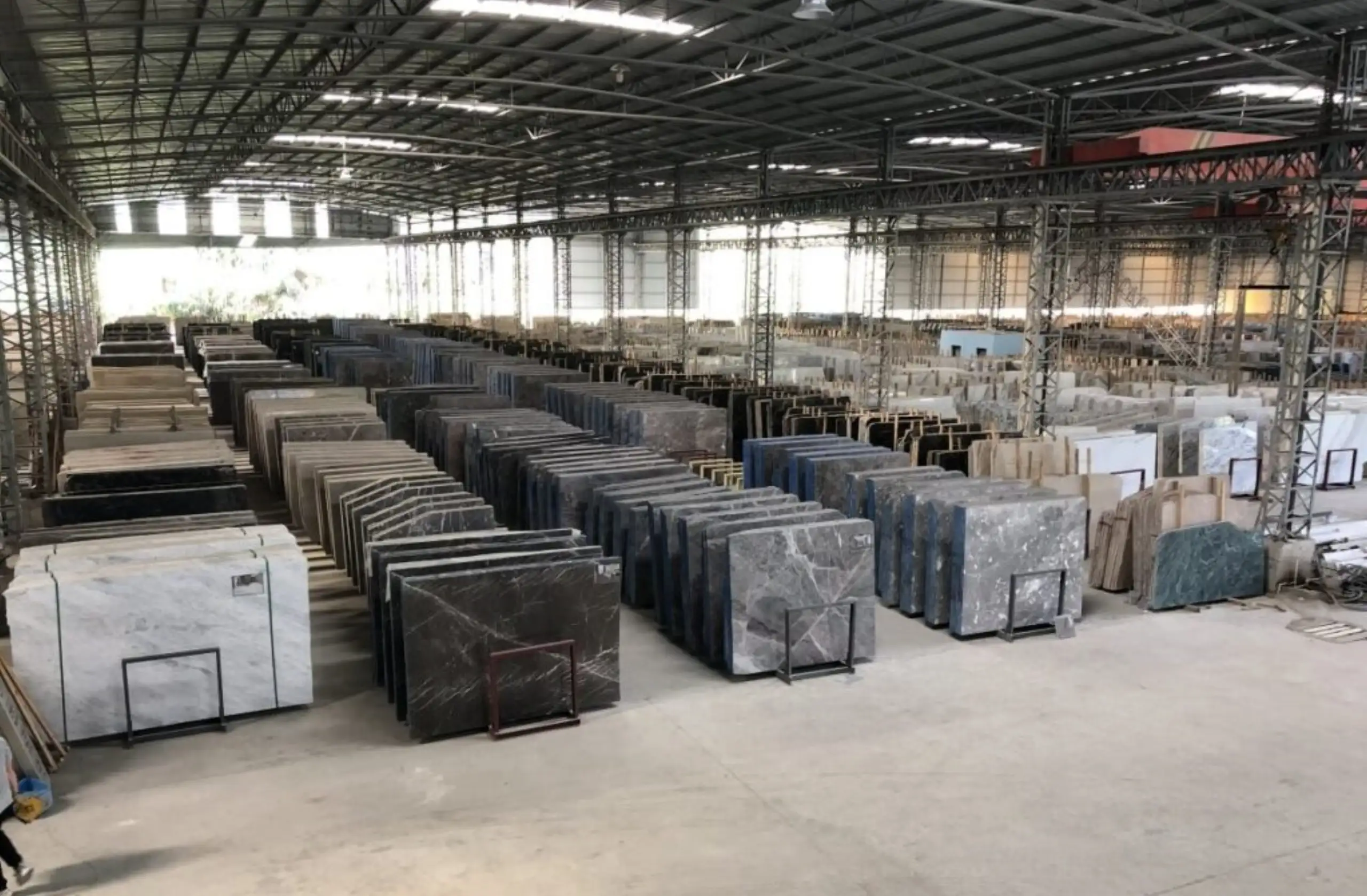
George Stone Inventory
When looking for one, make sure to only prioritize companies with a good reputation, verified certifications, and positive customer reviews. You’re dealing with fragile materials like natural stones so you want to be sure that your supplier has held a long record of seamless experiences with other customers.
For more leads, you can visit Websites like Alibaba, and Global Sources, or even partake in experiences like the Canton Fair, where the shipping of stone building materials is also processed. And one more thing, when buying natural stones, always ask for samples from different batches to check consistency. This ensures that the material you’ll receive in bulk maintains a consistent appearance and meets your quality expectations.
2. Negotiating The Price and Purchase Terms
When it comes to natural stones, the prices can vary based on quality, color or special features. So, when negotiating, make sure the contract clearly outlines product specifications, quantities, prices, payment terms, and delivery schedules. Discussing warranties, quality guarantees, and any potential penalties for delays or defects can also go a long way. To do this, effective communication is key. If you end up dealing directly with a Chinese stone company, make sure you consult a translator if need be, to avoid misunderstandings.
3. Pay Close Attention to Customs Regulations and Import Requirements
Understanding the customs and import-export regulations of both China and your home country is a must, especially if you don’t plan to use a local agent or supplier. In any case, the necessary documentation should include invoices, packing lists, and certificates of origin. Also, if you are dealing with a supplier from another country, ensure they have experience with exporting to your country. Finally, it can also be helpful to be aware of any tariffs, duties, or taxes that apply to your stone products.
4. Shipping, Logistics, and Transportation Needs Proper Planning
Importing stone from China involves coordinating logistics carefully. You have to decide if you want to use sea freight, air freight, or a combination, depending on your budget and timeline. It’s also important to choose a reliable freight forwarder who can handle safe transportation, customs clearance, and delivery to your final destination.
Having a safe delivery is probably the most thing you care about so you need to have a very trusted supplier with ultimate packaging care. This extra care is needed because of how easily breakable these stones are when in transit. With proper packaging strategies, your stones risk damage especially if they’re heavy and bulk ones like quartzite, granite or onyx.
5. Some Other Tips To Keep in Mind
- It can be very beneficial to attend stone industry trade shows in China to meet suppliers face-to-face and inspect their products firsthand.
- You have to know Incoterms like FOB and CIF to understand who pays for what and who takes on the risk during shipping.
- When planning your delivery timeline, consider the possibility of customs delays.
- Always get insurance for your stones to protect against damages or loss.
- Clearly define packaging requirements, because the worst packages aren’t late ones but the ones that arrive damaged.
How To Ensure Quality and Consistency While Importing Stone From China
Quality control and inspection of Chinese stones is always needed due to their delicate nature. This is the only way you can be sure that you’ll be getting the exact quality and specifications you outlined in your order. Follow through with these steps for more details.
Establishing Quality Control Measures

quality control
As said earlier, quality control is really just about making sure the stone you receive meets the standards and specifications you need. First of all, before placing an order, it is important to clearly define your quality requirements. This includes the type of stone, color, texture, size, quantity, and finish. You may need to work closely with your supplier to ensure they understand these specifications. In general, laying out a set of quality benchmarks that must be met before the stone is shipped can go a long way.
Conduct Inspections and Test Your Stone Materials

inspection
Quality control processes and inspections go hand-in-hand. Getting a product that doesn’t exactly meet your needs can be painful, especially when considering stone building materials coming from China. This is why a pre-shipment and post-arrival inspection is needed. When your stones are inspected before they are shipped, it is called a pre-shipment inspection. Doing this can help you avoid receiving subpar materials that could delay your project.
On the other hand, post-arrival inspection means checking the quality of your stone once it arrives at your location. After doing this, you can test the stone for durability, strength, and other features that are important to your specific needs.
Since testing entails onserving factors like water absorption, hardness, and resistance to wear and tear, you will need to contact quality testing professionals.
Managing Expectations and Mitigating Quality Risks

inspection 3
Clear communication is key when it comes to managing expectations and reducing quality risks. You should not hesitate to ask any questions at all, as long as it concerns your construction stone. From the outset, have open and honest discussions with your supplier about your needs and expectations.
Like we outlined previously, if you want to control risk, it’s wise to ask for samples from different batches of stone before placing a large order. With this, you can tell how consistent the supplier’s products have been over time. If the samples vary widely, then you know what to do— don’t risk purchasing.
Discussing Pricing and Cost Considerations For Stone Building Materials
When exploring building stone types in China, the price of each can vary widely depending on the quality, and the order size. While all natural stones including Limestone, Granite, Marble, and Quartzite all have a least price around $20 per square meter, some variations can go as high as $100 or more depending on the thickness, design or texture.
In any case, always ask for detailed quotes from multiple suppliers to make accurate comparisons and ensure you’re getting a fair price for the quality and quantity you want to buy.
Beyond the base cost of the stone’s features or type, importing stone from China involves other expenses that you should prepare for. These include additional costs attached to your stone materials import clearance. This cost can sometimes be hefty due to the weight of stone materials, customs duties, and various taxes.
On a final note, planning your budget for insurance, packaging, and the inland transportation of goods once they reach your country should be part of your priorities. Planning ahead for all of these will help you avoid unexpected expenses.
Comparison: Chinese Stones vs. Domestic Local Options
Its possible to be caught aback by the resources and time needed to effectively build with Chinese stones. From import-export regulations to handing shipping and transit maintenance, Chinese natural stones can actually take quite a toll in acquiring.
How about domestic local options, how do they compare with Chinese stones in all of these? Let’s assess.
- Costs: When compared to domestic stones, Chinese stones are often prices lower due to lower production and labor costs. The former have higher prices due to local production expenses and higher labor rates.
- Quality and Variety: Chinese stones comes in a wide range of options and grades, but quality can vary. On the other hand, domestic options offer fewer varieties but still maintain a high quality control.
- Shipping and Lead Time: Buying stone building supplies takes longer lead times and higher shipping costs whereas domestic options have shorter lead times and lower shipping costs.
- Environmental Impact: You typically get higher transportation emissions due to long-distance shipping but this is the opposite for domestic options.
- Availability: Building stone types in China are always readily available in large quantities however, domestic options may have limited availability based on local quarries.
Conclusion
Importing stone building materials from China is just like any other international-based product order. Once you research the type of stone you need, the quantity and quality, you need to find a reliable stone supplier, if need be. Remember that the entire process is not left to you alone. As long as you know what you want and can communicate that effectively to your supplier, then you’re most likely going to have a smooth process. Ensure to follow the guidelines and tips we have highlighted to secure your construction stone correctly. Don’t forget to give us a call, in case you need further information or clarity.
FAQ
How can currency fluctuations impact the cost of importing stone materials from China?
Currency fluctuations between your local currency and the Chinese Yuan does have an effect on the cost of importation. It can either increase or decrease the overall cost of the imported materials. So you’ll need to compare your country’s currency to China’s.
Is it possible to get customized stone cuts and finishes when importing from China?
Yes, many Chinese suppliers offer customized cutting, polishing, and finishing options to meet specific project requirements. However, these may come at an additional cost.

Find the right hotel renovation contractor with expert tips on PIPs, phased schedules, budgeting, and quality control to protect revenue and guest experience.
Find trusted home renovation contractors with our complete hiring guide. Get expert tips on budgeting, timelines, and ensuring quality results.
